Atlana: A Handwritten Font That Feels Like Your Best Creative Idea
I was halfway through designing a set of soy candle labels—amber glass jars, linen kraft tags, soft sage and terracotta palette—when I paused. The clean sans serif I’d been using for the scent names felt… polite. Correct. But not alive. Not warm. Not like something someone would pause to trace with their finger on a boutique shelf. That’s when I opened Atlana.
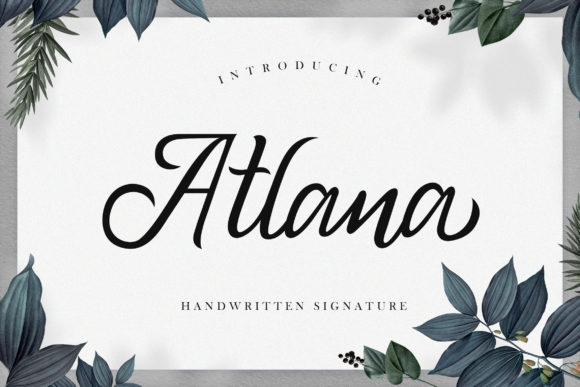
Atlana is an elegant handwritten font—but not in the overly looped, cursive-overload way. It’s confident, relaxed, and quietly intentional. Think ink-dipped nib meets modern rhythm: generous x-height, subtle contrast in stroke weight, gentle entry and exit strokes that flow without fuss. It doesn’t shout—it invites. And because it’s PUA encoded, every alternate character, swash, and ligature drops in cleanly, no glyph-hunting required. No more copying-pasting from character maps mid-design sprint.
I tested it first on a small 1.5" round sticker for a lavender-vanilla candle. At that size, Atlana held up beautifully—the lowercase “a” and “g” stayed legible, the spacing remained open, and the slight bounce in the baseline added charm without sacrificing clarity. For larger applications—like a 5x7" greeting card or a wedding invitation suite—I leaned into its expressive alternates: the looping “y”, the graceful “&”, the delicate swash on the capital “T”. Each variation felt like a quiet nod to craftsmanship, not decoration for decoration’s sake.
What surprised me most was how naturally Atlana elevated everyday shop materials. On matte-finish boutique tags? Instant warmth. On a printable wall art download featuring a seasonal quote (“Slow down, bloom where you’re planted”)—it transformed the layout from nice to *memorable*. Even on a simple black-and-white planner page header, Atlana added texture and personality without competing with functional layout elements.
It shines brightest in display roles: product names, titles, short phrases, monograms, and welcome signs. I used it for a farmhouse-style wooden sign reading “Gather Here”—paired with a light, airy sans serif (think Montserrat Light) for the subtext—and the contrast grounded the design while keeping it approachable. That pairing works consistently: Atlana as the voice, a clean sans or simple serif as the listener. Avoid pairing it with another busy script—it’s got presence, and it knows how to hold space.
For physical products, readability matters at every scale. On 0.75" gift tags? Stick to uppercase or short two-word phrases—“Joy” or “With Love”—and avoid tight tracking. For Cricut or Silhouette users cutting vinyl, test your cut settings with the heaviest swash characters first; Atlana’s thinnest strokes are delicate but stable at 12pt+ on printed materials and 18pt+ for vinyl cuts. On mugs or tote bags, use the bolder alternates (if included) or layer a subtle shadow—never stretch or distort the font to “fit.” Its magic is in its authenticity, not its adaptability.
Digital downloads benefit especially from Atlana’s PUA encoding. When creating a printable birthday kit, I dropped the font into Canva and Illustrator without worrying about missing glyphs—swashes appeared instantly when typing “&” or capitalizing the first letter. Same for SVG bundles: no need to outline text before exporting, since all alternates render reliably across platforms. Just remember—always verify the license includes commercial use for your intended output: physical goods, templates, merch, or editable digital files. Most reputable Script Handwritten fonts like Atlana include clear licensing, but double-check for multilingual support if you plan to offer translated versions.
I’ve used Atlana across seasons—delicate florals for spring wedding invitations, rustic caps for fall harvest tags, airy swirls for summer shower cards. It adapts without losing its core identity. That consistency builds subtle brand recognition: customers begin to associate that graceful lift in the “f”, that soft curve in the “e”, with thoughtful, handmade quality—even before they read a word.
It’s not a workhorse font for body text. Don’t try to set a full recipe card or product description in Atlana. But as a headline, a name, a sentiment, or a decorative accent? It adds emotional resonance that generic fonts simply can’t replicate. There’s a reason so many stationery designers reach for this kind of premium font when refining final mockups—it signals care, intention, and attention to tactile detail.
For packaging, I printed Atlana directly onto kraft mailer boxes alongside minimalist line art. The font’s organic imperfections—slight variations in stroke thickness, natural tapering—made the print feel human-made, not mass-produced. Same with tea towel designs: a single phrase in Atlana, centered and uncluttered, turned a simple cotton cloth into something heirloom-adjacent.
If you're choosing a handwritten font for your shop, ask yourself: does it reflect the feeling you want people to have when they hold your product? Not just “cute” or “elegant”—but *true*. Atlana feels like the moment you find the perfect ribbon for a gift, or the exact shade of blush ink that matches your dried florals. It’s not flashy. It’s faithful—to your vision, your materials, and the quiet confidence of making things by hand.
Whether you're prepping holiday tags, sketching a new logo concept, building a Canva template shop, or laying out a wedding suite for a client, Atlana fits in without fading out. It’s the kind of typeface that doesn’t draw attention to itself—until someone stops, looks closer, and says, “I love the way this feels.”